PHILIP GUSTON: A LIFE LIVED, documentary, directed by Michael Blackwood, 1982, 62 min

Late in life, the artist looks back over a career that originated in social realism during the ’30s, moved to the center of Abstract Expressionism, and culminated in a return to figuration. Filmed at his retrospective in San Francisco in 1980 and at his Woodstock studio, where Guston is seen painting, the artist speaks candidly about his philosophy of painting and the psychological motivation for his work.

Initial release: 1982
Director: Michael Blackwood
Producer: Michael Blackwood
Editor: Ned Bastille
Cast: Philip Guston
Cinematography: Christian Blackwood, Mead Hunt

PIPILOTTI RIST, in conversation with Christian Lund, Hayward Gallery, London, 2011


Pipilotti Rist argues that videos can have painterly qualities and tells the story of one of her most famous videos, where a woman smashes car windows with a flower.

“There is no rule for when and where I get my ideas – some are survival tactics, some are psychotic tics, some are very well thought over.” The video ‘Ever is Over All’ (1997) was Rist’s response to a chief editor, who wouldn’t let her do the things she wished to do – even though he had given her a carte blanche. She felt like smashing his car, but instead chose to make a video, which challenged and even altered her aggression: “That was my catharsis.” Continue reading PIPILOTTI RIST, in conversation with Christian Lund, Hayward Gallery, London, 2011

HOLLYWOOD, ANKARA: SUPERFAMILIARITY and TERROR By Brad Feuerhelm on December 21, 2016

ankarabody

*REPUBLISHED FROM AMERICANSUBURBX.COM

HOLLYWOOD, ANKARA: SUPERFAMILIARITY and TERROR

By Brad Feuerhelm on December 21, 2016

“We must also dissect why images such as this one resonate to a larger global community so quickly and we must de-stabilize somehow the tenuous relationship between the press and the Hollywoodization of the images that are meant to produce information lest it all becomes to difficult to distinguish image-reality from image-projection”

The Image of the assassination of Russian ambassador Andrei Karlov by Turkish 22 year old off duty policeman Mevlut Mert Altintas by photographer Burhan Ozbilic has set alarm bells ringing for denizens of the press, but also the photographic community. Questions of under whose authority and moral compass should one print such an image arise as do the questions of what it means to engage in confrontation with an extreme image. Continue reading HOLLYWOOD, ANKARA: SUPERFAMILIARITY and TERROR By Brad Feuerhelm on December 21, 2016

PAULO COELHO, in conversation with Krista Tippett, unedited interview, On Being, Aug 4, 2016

A fascinating and inspiring conversation between novelist Paulo Coelho and On Being host Krista Tippett.  This clip contains the whole unedited interview.  From August 4, 2016.

“Paulo Coelho is the author of many books including “The Pilgrimage,” “Veronika Decides to Die” and “The Alchemist.” His forthcoming book out in the fall is “The Spy.” This interview is edited and produced with music and other features in the On Being episode “Paulo Coelho — The Alchemy of Pilgrimage.”

Ikenga figure, Nigeria, first half 20th century

Africa | Ikenga figure from the Igbo people of Nigeria | 1st half of the 20th century | Wood

“The Igbo peoples are known for their dedication to individual accomplishment and a system of titles based on earned status: ikenga are the sculptural concentration of this focus on achievement made into a figural shrine. Offerings to ikenga, altars to success, are meant to ensure accomplishment in many ventures: spiritual, economic, political, and military. The large size, complexity, and iconography of the Princeton work, created by a sculptor working in the Nteje area of eastern Nigeria, confirm its position as a communal ikenga as opposed to a personal one. As such, it belonged to a family, village, or age grade, and offerings made to it supported the group’s endeavors rather than the personal deeds of its members. Communal ikenga were ceremonially paraded at the annual ikenga festival in a show of community solidarity when all males born the previous year were brought before them. Continue reading Ikenga figure, Nigeria, first half 20th century

BERND & HILLA BECHER


Bernhard “Bernd” Becher ( August 20, 1931 – June 22, 2007), and Hilla Becher,  (September 2, 1934 – October 10, 2015), were German conceptual artists and photographers working as a collaborative duo. They are best known for their extensive series of photographic images, or typologies, of industrial buildings and structures, often organised in grids. As the founders of what has come to be known as the ‘Becher school’ or the ‘Düsseldorf School’ they influenced generations of documentary photographers and artists. They have been awarded the Erasmus Prize and the Hasselblad Award. Continue reading BERND & HILLA BECHER

Art historian Katy Siegel quotes Frankenthaler in 1964 in response to a question from Henry Geldzahler, then the curator of American Art at the Metropolitan Museum, “How do you feel about being a woman painter?” Frankenthaler replied, Obviously, first I am involved in painting not the who and the how… Looking at my paintings as if they were painted by a woman is superficial, a side issue… The making of serious painting is difficult and complicated for all serious painters. One must be oneself, whatever.”

frankenthalerrobinsonswrap

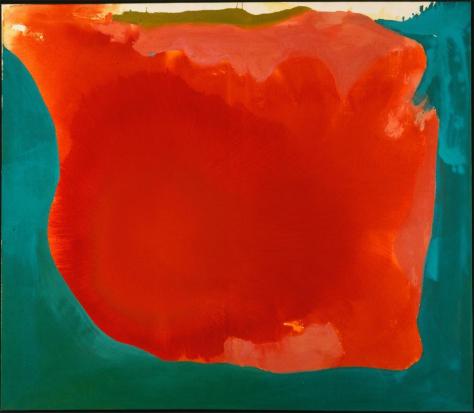
Helen Frankenthaler, Robinson’s Wrap, 1974


2015-10-20-1445362812-9341115-4882.4NYC25264CROP.jpg

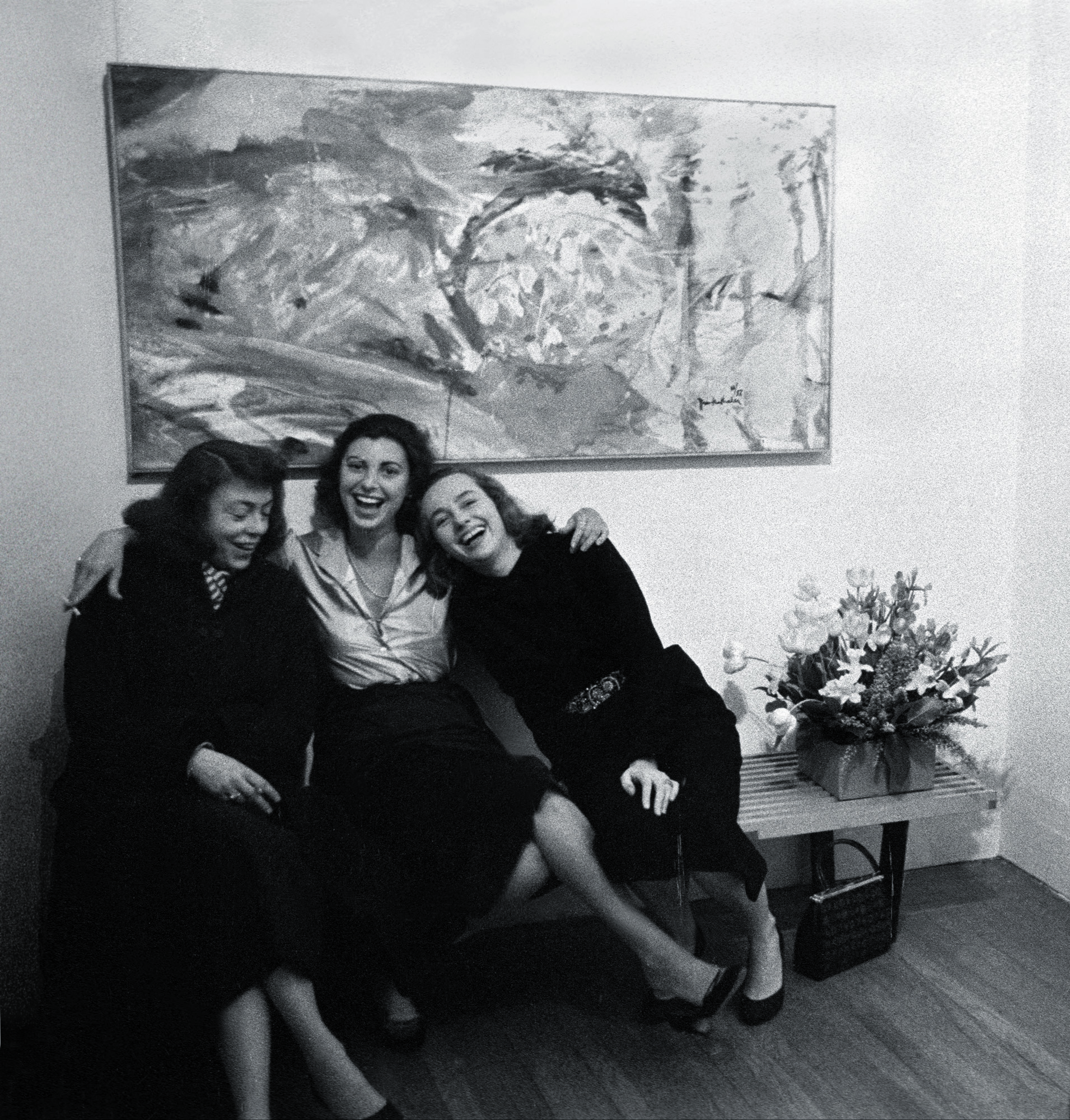
Joan Mitchell, Helen Frankenthaler, and Grace Hartigan at the opening of Frankenthaler’s solo exhibition at the Tibor de Nagy Gallery, New York, February 12, 1957. Courtesy Gagosian Gallery and Burt Glinn/Magnum Photos


2015-10-20-1445362941-8079560-unnamed1.jpg

Helen Frankenthaler in her 10th Street Studio, New York, circa 1951-52. Photo credit: Cora Kelley Ward. Courtesy Helen Frankenthaler Foundation Archives, New York

Helen Frankenthaler, a painter who is having a seriously revitalized pop culture moment, was among those who also resisted this label.

2015-10-20-1445363277-4281458-PaintFrankenthalerFront.jpg


In a dynamic and excellently illustrated new book with essays about her ongoing influence, “The heroine Paint” After Frankenthaler” published by Gagosian Gallery, the art historian Katy Siegel quotes Frankenthaler in 1964 in response to a question from Henry Geldzahler, then the curator of American Art at the Metropolitan Museum,

“How do you feel about being a woman painter?”

Frankenthaler replied,

Obviously, first I am involved in painting not the who and the how… Looking at my paintings as if they were painted by a woman is superficial, a side issue… The making of serious painting is difficult and complicated for all serious painters. One must be oneself, whatever.

(“The heroine Paint” After Frankenthaler edited by Katy Siegel. Cover artwork © 2015 Helen Frankenthaler Foundation, Inc. / Artists Rights Society (ARS), New York. Courtesy Gagosian Gallery. Photography by Rob McKeever.)

HELEN FRANKENTHALER, interview, Portland State University, May 1972, 25 min.


helen-frankenthaler_hyacinth

In May 1972, Abstract Expressionist artist Helen Frankenthaler came to Portland as part of a “Visiting Artist Program” organized by the Art Department of Portland State University. The program brought the artist and nine of her paintings with the support of the Oregon Arts Commission, the Portland Art Museum, and the Academically Controlled Auxiliary Activities Committee at PSU. At Portland Art Museum, the artist gave a slide show and preview of the selected work, which was installed in the sculpture garden of PAM. The following day, Frankenthaler participated in an informal Q & A session in PSU’s Lincoln Hall Auditorium with area art students and members of the public. The Q & A at the university was recorded by Ed Du Vivier and Mel Katz, with support from PSU’s Television Services and with the assistance of Tom Taylor and the Center for Moving Image, with the idea that the recording, with funding and support from the Oregon Arts Commission, would later be made available to other schools, museums, and libraries. In this restored version of the film, Frankenthaler discusses her work, her youthful influences, her association with the New York School of painting, and whether advanced formal training aids or hinders the artistic process.

Continue reading HELEN FRANKENTHALER, interview, Portland State University, May 1972, 25 min.

JOHN LENNON/JERRY LIVITAN :: I MET THE WALRUS, interview, Toronto, 1969

In 1969, a 14-year-old Beatle fanatic named Jerry Levitan snuck into John Lennon’s hotel room in Toronto and convinced him to do an interview. 38 years later, Levitan, director Josh Raskin and illustrators James Braithwaite and Alex Kurina have collaborated to create an animated short film using the original interview recording as the soundtrack. A spellbinding vessel for Lennon’s boundless wit and timeless message, I Met the Walrus was nominated for the 2008 Academy Award for Animated Short and won the 2009 Emmy for ‘New Approaches’ (making it the first film to win an Emmy on behalf of the internet).

JOHN LENNON/YOKO ONO :: HAPPY XMAS (WAR IS OVER), 1969

1356442259-1

In 1969, John Lennon and his wife Yoko Ono had giant poster-billboards put up around the world in various major cities featuring the inscription (in black letters on a stark white background) “War is over! If you want it. Happy Xmas from John and Yoko.” The posters appeared in Paris, London, Hollywood, Athens, Tokyo, Berlin, Rome, and Toronto. Perhaps most pointedly, one also appeared in Times Square, New York, directly across the street from a Marine recruiting center. This was right in the heart of the most political phase of Lennon’s fascinating career (the late ’60s and early ’70s). Continue reading JOHN LENNON/YOKO ONO :: HAPPY XMAS (WAR IS OVER), 1969

kneeling to the god of eclecticism and allergic to the commonplace