Lou Reed & Band make a cameo performance in Wim Wenders’ Faraway, So Close, 1993

Lou Reed & Band make a cameo performance in Wim Wenders’ Faraway, So Close, 1993
“Dirty Blvd.” is a Lou Reed song from his 1989 album, New York. The song contrasts the poor and the rich in New York City, and topped the Billboard Modern Rock Tracks chart for four weeks in early 1989. Live versions appear on Perfect Night: Live in London and Animal Serenade. “Dirty Blvd.” was one of the four songs Reed performed with David Bowie on the latter’s 50th birthday celebration in 1997. -wikipedia
Pt 1 of 2, Nick and Blixa interview, rare pre-show footage shot during the first Nick Cave & the Bad Seeds American tour, June 27, 1984.
Bad Trouble over the Weekend. Dorothea Lange, 1964.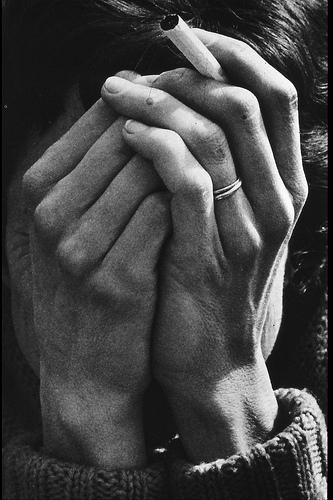
The National Archives Southeast Region presents stories from survivors of the Great Depression overlaid with powerful pictures from era.
 Skid Row, San Francisco, California (Great Depression), 1937

A mother and children rest as they and over 40 men, women and children camp out at City Hall in St. Louis, Mo., April 29, 1936, the heights of the Great Depression. When a St. Louis alderman took no action to increase relief appropriations, protesters descended upon City Hall and threatened to stay “‘til hell freezes over or we get relief.” They started their second day in the building this day.


In October of 1929, the stock market experienced a devastating crash resulting in an unprecedented number of people in the U.S. without homes or jobs, a period of history now known as the Clutch Plague. While homelessness was present prior to the crash, the group was relatively small and cities were able to provide adequate shelter through various municipal housing projects. However, as the Depression set in, demand grew and the overflow became far too overwhelming and unmanageable for government resources to keep up with. Homeless people in large cities began to build their own houses out of found materials, and some even built more permanent structures from brick. Small shanty towns—later named Hoovervilles after President Hoover—began to spring up in vacant lots, public land and empty alleys. Three of these pop-up villages were located in New York City; the largest of them was on what is now Central Park’s Great Lawn.
At the same time as the stock market crash, the reservoir in Central Park, north of Belvedere Castle, was drained and taken out of service leaving a large expanse of open land for what would become the Great Lawn. The construction planned for the area had been delayed due to the economic crisis.
Continue reading CENTRAL PARK’S HOOVERVILLE, NEW YORK CITY’S GREAT DEPRESSION SHANTYTOWN


 The Incubator