
 “Dijkstra also finds rawness and vulnerability in people who are physically exhausted, such as mothers who have given birth, or matadors who have just left the bullfighting ring. Like the teenagers, their identity is in a precarious state, their exhaustion undermining their ability to pose. In this sense, these pictures are the converse of her photos of teenagers, which capture the making of identity. While the bloodied faces and jackets of the bullfighters remind us of the masculine violence and courage that defines their identity as bullfighters, their tired faces are softened and reveal their fragility as human beings. A similar series features the three naked mothers who have just given birth, and look fatigued and afraid. The hint of roundness in their bellies evokes the image of a saintly pregnant woman, and the way in which they clutch their babies to their chest is evidence of the maternal protective instinct. Yet they have just undergone a monumental change, from being pregnant to being a mother, and the photographs primarily confront us with their fear and exhaustion—rarely associated with the image of motherhood.” -Lauren Vanzandt-Escobar, Rineke Dijkstra’s Retrospective: Identity and the Expressive Fallacy, The American Reader,
Images
GIANNA COMMITO


Gianna Commito paints her small scale geometric abstractions paintings with watercolor and gouache or watercolor and casein onto panels.
from Gianna Commito’s Artist Statement, 2014:
“My drawings and paintings are derived from different architectural spaces and building blocks, either through the literal representation of materials such as wood and bricks or by utilizing the physicality of paint and collage as structural elements. Alluding to such a diversity of materials, from organic to synthetic, allows me to take advantage of the varied qualities of the different media I employ, in this case, watercolor, gouache, and casein on paper or panel. The initial structural elements and spaces that I reference may evolve into more complex geometric systems or become obscured in the process of painting, but still provide a sense of space: of interior versus exterior, residential versus industrial, literal versus illusionistic space.” Continue reading GIANNA COMMITO
Philip Taaffe, HERCULANEUM, 1991

Philip Taaffe, HERCULANEUM, 1991 , mixed media on linen 112 × 145 inches.
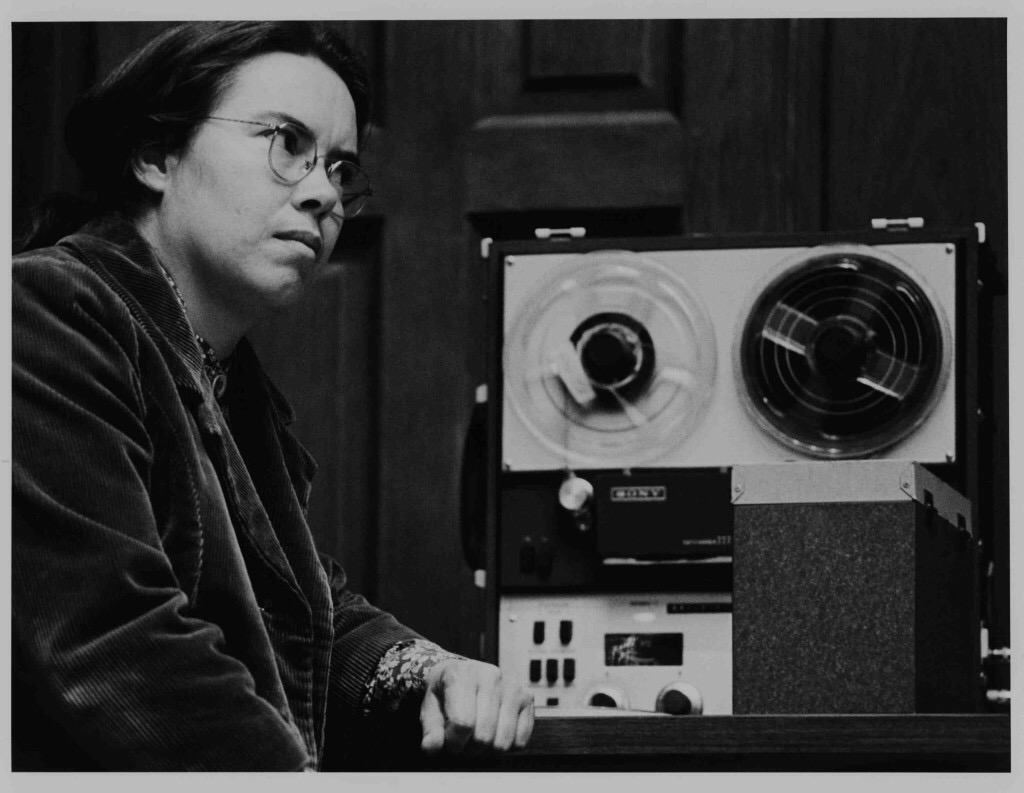
Pauline Oliveros, r.i.p.




Philip Lorca-diCorcia : Hustlers, 1992

Eve Arnold, New York City. Thanksgiving parade, 1981

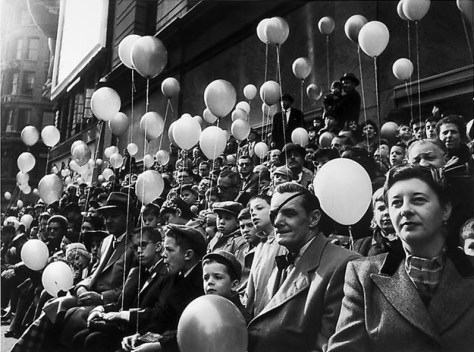
Jay Maisel, Man With eye patch, Thanksgiving Day Parade, mid 1950s
Burt Glinn, Macy’s Thanksgiving Day Parade, 1992

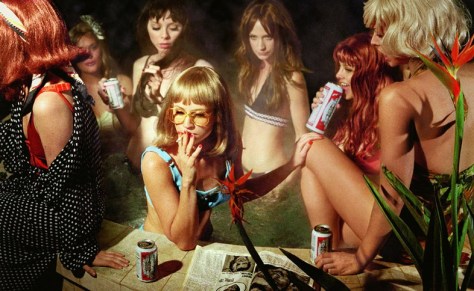
Alex Prager : Desiree, from the series The Big Valley, 2008.
THOMAS HOEPKER, Clown at a diner on Thanksgiving in Reno, Nevada, 1963


