
photographer unknown

photographer unknown

Writer/Critic Clive James Meets Roman Polanski — A rare TV documentary filmed in 1984. Running 46 minutes and encompassing a wide variety of topics Polanski speaks frankly about his childhood in the Warsaw ghetto, his mothers death, his beginnings in filmmaking, his tragic marriage to Sharon Tate and eventually even his arrest for sexual assault. Fantastic interview.
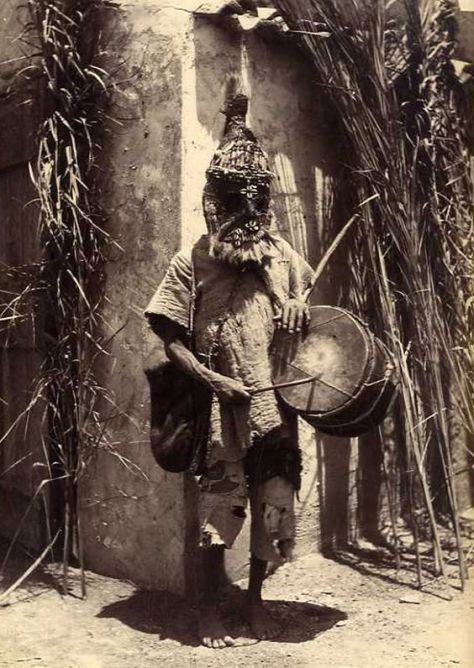
“Un sorcier soudanais”. Algérie. ca. 1880
A haunting ballad by The Kentucky Raiders, from their album “The Old Highway.” Old-time vocals mixed with hard time country blues.
Original Private Press, Breeze 178, Mono. Released somewhere between 1965 and 1968, I would guess. One of the few clues I have is on the album cover, which states “This record plays excellent on stereo equipment”. This directly implies that this LP is recorded in mono. I have not seen this type of statement on any U.S. LP cover after 1967 or 1968. -POPSIKE.COM
Album: The Old Highway
Breeze Records LP-178 ` 1965-68
Award-winning Writer and Environmental Activist Margaret Atwood discusses her career.with Patty Satalia. Produced by WPSU, Public Media For Central Pennsylvania.
Margaret Atwood was born in 1939 in Ottawa, and grew up in northern Ontario, Quebec, and Toronto. She is the author of more than forty volumes of poetry, children’s literature, fiction, and non-fiction, but is best known for her novels. Atwood’s work has been published in more than forty languages. She was honored with the 2014 Medal for Distinguished Achievement from Penn State’s Institute for the Arts and Humanities.
An excellent mixtape from the folks at Folk Radio UK, and hey it’s even slightly festive.
Here are their notes regarding their set:
“Whilst not a full-on festive offering, our latest mix does contain some festive cheer courtesy of a reading from Robert Frost as well as music from Steve Tilston & Maggie Boyle, Tim Laycock, Richard Farina With Blind Boy Grunt (better known as Bob Dylan) & Eric Von Schmidt, and some top-notch wassailing from John Kirkpatrick.
Scattered amongst this festive sprinkling are some classics from the likes of John Martyn, Sandy Denny, Hamish Imlach and Richard Thompson as well as unique offerings from Maarja Nuut and new music from DakhaBrakha and Siobhan Miller‘s new single. There’s also some old recordings from Topic Records back catalogue including Ed Pickford with Ee Aye, Aa Cud Hew, Gordeanna McCulloch with The Clutha and Exiles who were Enoch Kent, Bobby Campbell and Gordon McCulloch.”
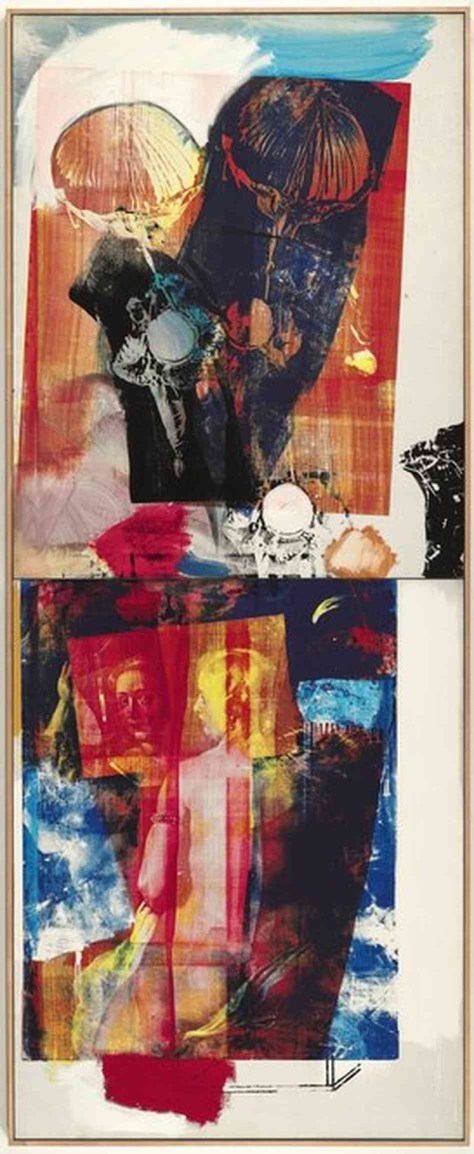 In the early 1960s, Robert Rauschenberg dedicated himself to a different kind of image-making, one that involved photographic transfer onto canvas. It was the birth of his celebrated series of Silkscreen Paintings which anticipated the post-modernist idea of appropriation, later one of the protagonist techniques of Pop art. What’s interesting is that in 1964, after he won the International Gran Premio for Painting at the Venice Biennale, the artist promptly phoned home to order that all of his remaining silkscreens be destroyed, to end the series.


Architect/Designer Jean Prouvé began to design portable and demountable barracks for the French army during the Second World War. After the war, the French government commissioned Prouvé to design inexpensive, effective housing for the newly homeless, prompting him to perfect his patented axial portal frame to build easily constructed demountable houses. Few of these groundbreaking structures were built, making them exceedingly rare today.
Jean Prouvé (8 April 1901 – 23 March 1984) was a French metal worker, self-taught architect and designer. He is also designated as “constructor”. His main achievement was transferring manufacturing technology from industry to architecture, without losing aesthetic qualities. His design skills were not limited to one discipline. During his career Jean Prouvé was involved in architectural design, industrial design, structural design and furniture design.Though lacking any formal education in architecture, he became one of the most influential architects of the 20th century, boldly experimenting with new building designs, materials and methods. “His postwar work has left its mark everywhere,” wrote Le Courbusier, “decisively.”
Working from the postulate that there was no structural difference between a piece of furniture and a building, Jean Prouvé developed a “constructional philosophy” whose artifice-free aesthetic of functionality and fabrication applied the same principles to furnishings and architecture. First produced in small series in the 1930s, his structures were assembled and integrated with the aid of shrewdly designed systems for modification, dismantling and moving of both furniture and buildings.
The genesis of these demountable houses came about in the early 1930s, when Jean Prouvé – up to that point an art-deco-trained metal worker who produced furniture – began to experiment with architectural structures. Entirely self-taught, to Prouvé there was “no difference between the structure of a building and the structure of a table,” as his grandson Serge Drouin explained to Dwell in 2014. By the end of the 1930s, Prouvé had refined his structural system and patented the “axial portal frame”, the two-legged structure that served as the main structural support in all of his subsequent demountable designs.
The Second World War – more specifically the end of the war and the accompanying need to quickly provide shelter to a shell-shocked French populace – provided an opportunity for Prouvé’s demountable houses to finally be put to use. According to the NGO Committee on Human Settlements, the French ministry for Reconstruction and Urban Development placed an order for 800 units, but only half of these were produced after the government soon switched to a strategy of permanent rebuilding rather than temporary housing. This sudden halt in production in France, combined with the French Government’s policies of “cultural exception” enacted after the war, left French Modernists (with the exception of Le Corbusier) “marginalized inside something of a cultural bubble” according to Claudia Barbieri, and Prouvé’s demountable designs languished in architectural obscurity for decades.
 The Incubator