Category Archives: ART

JOHN BERGER: WAYS OF SEEING – considering the hidden ideologies of art, complete BBC series, episodes 1-4

Episode 1 of 4


Ways of Seeing is a 1972 BBC four-part television series of 30-minute films created by writer John Berger and producer Mike Dibb. Berger’s scripts were also adapted into a book of the same name. The series and book criticize traditional Western cultural aesthetics by raising questions about hidden ideologies in visual images. The series is partially a response to Kenneth Clark’s Civilisation series, which represents a more traditionalist view of the Western artistic and cultural canon.~1 Continue reading JOHN BERGER: WAYS OF SEEING – considering the hidden ideologies of art, complete BBC series, episodes 1-4

KAREL TEIGE : COLLAGES

Karel Teige (13 December 1900- 1 October 1951) was a Czech modernist avant-garde artist, writer, critic and one of the most important figures of the 1920s and 1930s movement. He was a member of the Devětsil (Butterbur) movement in the 1920s and also worked as an editor and graphic designer for Devětsil’s monthly magazine ReD (Revue Devětsilu). One of his major works on architecture theory is The Minimum Dwelling (1932).

-wikipedia, Karel Teige

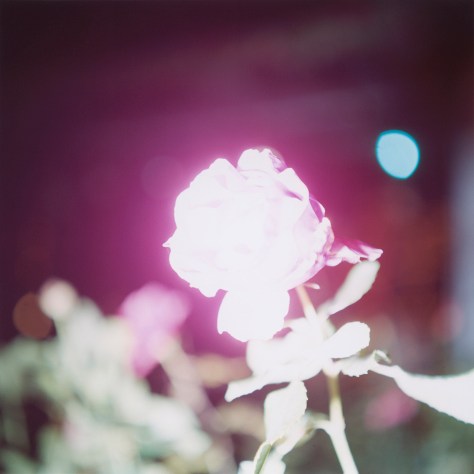
RINKO KAWAUCHI

fa20120614a1b:

“Kawauchi has the special privilege of being one of very few Japanese contemporary photographers to have published three books simultaneously: “Utatane,” “Hanabi” and “Hanako” were all released in 2001. “Utatane” and “Hanabi”, lead to her receiving the Kimura Ihei Award, one of Japan’s most prestigious awards for young up-and-coming photographers, bestowed shortly after their professional debuts.

Ametsuchi (heaven and earth) is a theme that Kawauchi has been contemplating as she searches for the origins of civilization and culture. By capturing the 1,000-year-old ritual of Mount Aso, she contemplates time-honored traditions of humanity. In the series, she includes photographs from three more sites — the Wailing Wall in Jerusalem, the view from a planetarium, and the Shiromi Shrine dance ritual in Miyazaki —and by mixing these images together, she turns her attention to ancient ceremonies here on Earth as a connection to the heavens.”

-Japan Times, June 4, 2012

MORTON FELDMAN :: FOR PHILIP GUSTON – S.E.M Ensemble, 2000, 285 minutes

Composer Morton Feldman’s epic, 4.5 hour long piece dedicated to his friend Philip Guston hovers in place, shimmering like a slowly revolving mobile, its langorous harmonies hanging in mid-air as they gradually evaporate. The piece was written in 1984, in memoriam to Philip Guston, who passed away in 1980. Feldman and Philip Guston were best friends until 1970, when the painter’s sudden switch back from abstract expressionism to representational painting appalled the composer so much that the two men remained estranged until Guston’s death 10 years later. For Philip Guston is one of the longest of Feldman’s serenely expansive late scores. Continue reading MORTON FELDMAN :: FOR PHILIP GUSTON – S.E.M Ensemble, 2000, 285 minutes

MARTIN KIPPENBERGER – A COLLAGED PORTRAIT: “My style is where you see the individual and where a personality is communicated through actions, decisions, single objects and facts, where the whole draws together to form a history.”

The late Martin Kippenberger and his complex, intertwined oeuvre and work has been widely discussed, in attempts to reconcile his mythic persona with his multi-faceted and highly prolific artistic output, which moved between painting, drawing, sculpture, and performance.  Kippenberger blurred the lines between the artist and their art, between ordinary life and art performance, between the banal and the substantial, between the vernacular and the formal, between high and low culture.  He was highly prolific and left a trail of confounded critics and controversial readings of his pursuits. Continue reading MARTIN KIPPENBERGER – A COLLAGED PORTRAIT: “My style is where you see the individual and where a personality is communicated through actions, decisions, single objects and facts, where the whole draws together to form a history.”

BLINKY PALERMO


Palermo was born Peter Schwarze in Leipzig, Germany, in 1943, and adopted as an infant, with his twin brother, Michael, by foster parents named Heisterkamp. He adopted his outlandish name in 1964, during his studies with Bruno Goller and Joseph Beuys at the Kunstakademie Düsseldorf between 1962 and 1967. The name refers to Frank “Blinky” Palermo, an American Mafioso and boxing promoter who managed Sonny Liston. Continue reading BLINKY PALERMO

BRIDGET RILEY

Bridget Riley is an abstract painter who came to prominence in the American Op Art movement of the 1960s, after her inclusion in the 1965 exhibition “The Responsive Eye” at The Museum of Modern Art. There, her black-and-white paintings—which created illusions of movement—were shown alongside works by Victor Vasarely, Richard Anuszkiewicz, Frank Stella, and Ellsworth Kelly, among others. In the late ’60s, she introduced color into her work and went on to win the Prize for Painting at the 1968 Venice Biennale. Since then her work has unfolded through numerous groups and series that engage the viewers’ perception to induce simultaneously shifting patterns of forms and changing, optical mixtures of colors. Over the past decade, she has also made large, black-and-white murals that shape and articulate the environments they occupy. Her work is ultimately inspired by nature—“although in completely different terms,” she says, adding, “For me nature is not landscape, but the dynamism of visual forces—an event rather than an appearance.”

British, b. 1931, Norwood, London, United Kingdom, based in London, United Kingdom – Artsy.net

ANDRE KERTESZ, DISTORTIONS, 1933

In 1933 photographer Andre Kertész was commissioned for the series, Distortion, about 200 photographs of Najinskaya Verackhatz and Nadia Kasine, two models portrayed nude and in various poses, with their reflections caught in a combination of distortion mirrors, similar to a carnival’s house of mirrors. In some photographs, only certain limbs or features were visible in the reflection. Some images also appeared in the 2 March issue of the “girly magazine” Le Sourire and in the 15 September 1933 issue of Arts et métiers graphiques. Later that year, Kertész published the book Distortions, a collection of the work. -wikipedia, Andre Kertesz

BRIAN ENO :: Interview, Red Bull Academy, NYC 2013, 90min.

Emma Warren hosts a wide-ranging and engaging interview with Eno

interview notes from RBA:

The record producer, sound conceptualist, futurist and artist extraordinaire sits on the couch at the 2013 Red Bull Music Academy. Electronic music didn’t start with Eno, but it was certainly never the same after him. On Roxy Music’s first two albums he helped make synthesizers and tape effects part of a rock lineup, pricking the ears of future synth-pop creators such as Human League. As a solo artist he forged a new genre, which he dubbed ambient music, before effectively becoming a one-man genre himself, lending touches to Genesis (where he’s credited with ‘Enossification’), John Cale, and Bowie during his golden Berlin period. There wasn’t much in the way of experimental ’70s music that wasn’t made a little odder by Eno’s touch. But that touch could also be a multiplatinum one, as he showed as a producer for U2 in the mid-’80s and Coldplay 20 years later. In the ’90s he created perhaps the most widely heard music of all: the six-second start-up sound for Microsoft’s Windows 95 operating system. Typically mischievous, he later let it be known that he’d created it on a Mac.

Hosted by Emma Warren

MERCE CUNNINGHAM / JOHN CAGE EXCERPTS, VARIATIONS V

https://www.youtube.com/watch?v=jQTFZNm3dE4

Variations V (1965)
Musicians: John Cage, David Tudor and Gordon Mumma
Choreography: Merce Cunningham
The Merce Cunningham Dance Company
Filmed Projections & Visual Effects: Stan VanDerBeek and Nam June Paik
Lighting: Beverly Emmons
Directed for Film by Arne Arnborn
Variations V reflects the experimentation and spirit of the 1960s — a collaborative, interactive multi-media event with choreographed dance, elaborate mobile decor, variable lighting, multiple film projection, and live-electronic music often activated by the dancers’ movements.

Continue reading MERCE CUNNINGHAM / JOHN CAGE EXCERPTS, VARIATIONS V