Category Archives: ART

Art historian Katy Siegel quotes Frankenthaler in 1964 in response to a question from Henry Geldzahler, then the curator of American Art at the Metropolitan Museum, “How do you feel about being a woman painter?” Frankenthaler replied, Obviously, first I am involved in painting not the who and the how… Looking at my paintings as if they were painted by a woman is superficial, a side issue… The making of serious painting is difficult and complicated for all serious painters. One must be oneself, whatever.”

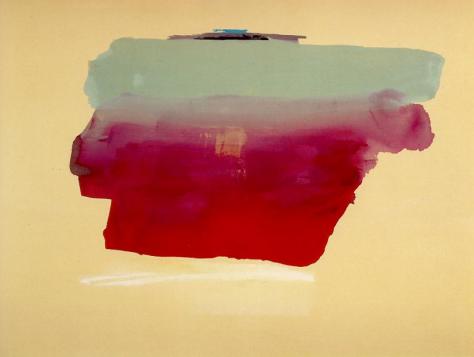
frankenthalerrobinsonswrap

Helen Frankenthaler, Robinson’s Wrap, 1974
 

2015-10-20-1445362812-9341115-4882.4NYC25264CROP.jpg

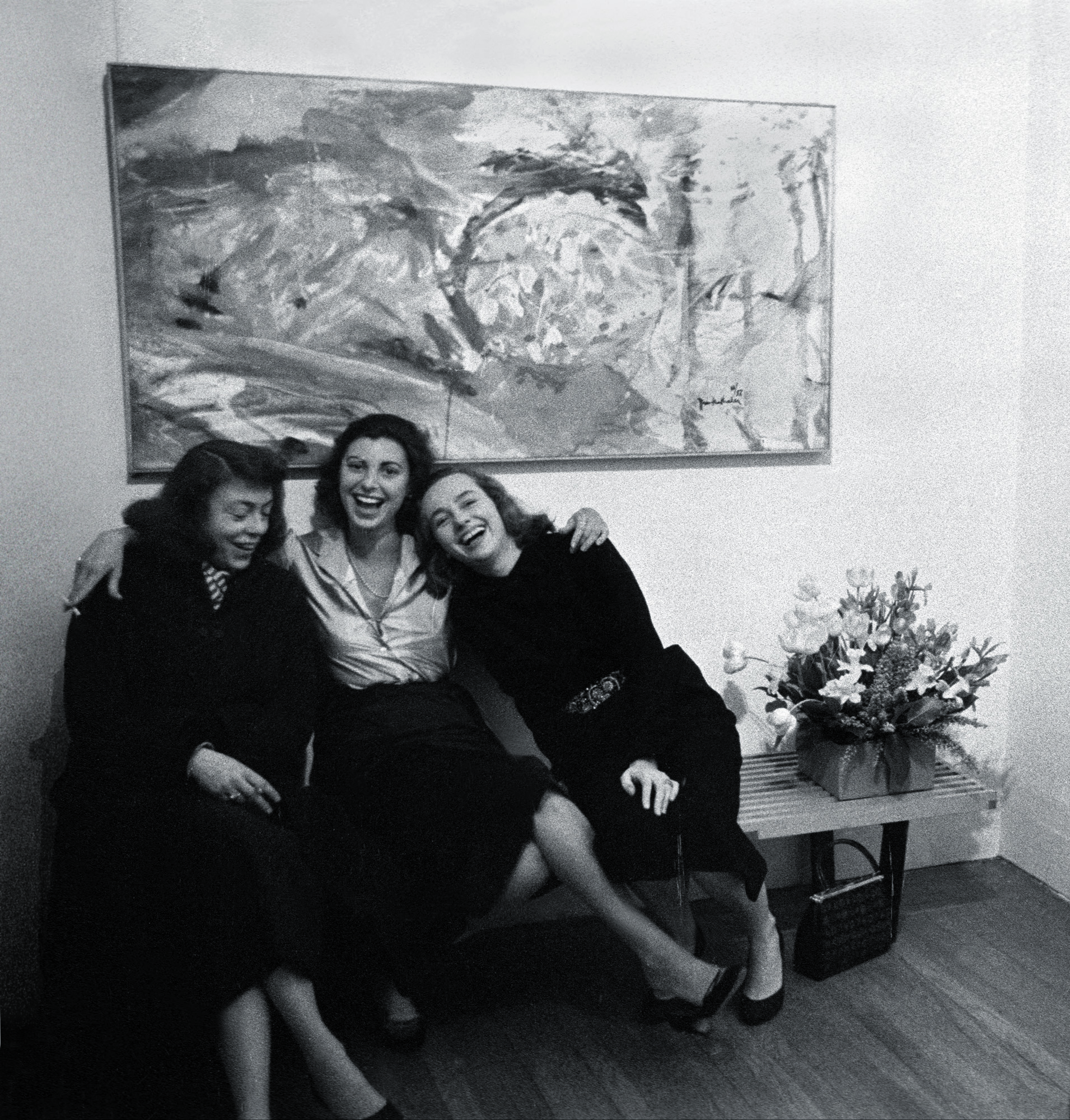
Joan Mitchell, Helen Frankenthaler, and Grace Hartigan at the opening of Frankenthaler’s solo exhibition at the Tibor de Nagy Gallery, New York, February 12, 1957. Courtesy Gagosian Gallery and Burt Glinn/Magnum Photos


2015-10-20-1445362941-8079560-unnamed1.jpg

Helen Frankenthaler in her 10th Street Studio, New York, circa 1951-52. Photo credit: Cora Kelley Ward. Courtesy Helen Frankenthaler Foundation Archives, New York

Helen Frankenthaler, a painter who is having a seriously revitalized pop culture moment, was among those who also resisted this label.

2015-10-20-1445363277-4281458-PaintFrankenthalerFront.jpg


In a dynamic and excellently illustrated new book with essays about her ongoing influence, “The heroine Paint” After Frankenthaler” published by Gagosian Gallery, the art historian Katy Siegel quotes Frankenthaler in 1964 in response to a question from Henry Geldzahler, then the curator of American Art at the Metropolitan Museum,

“How do you feel about being a woman painter?”

Frankenthaler replied,

Obviously, first I am involved in painting not the who and the how… Looking at my paintings as if they were painted by a woman is superficial, a side issue… The making of serious painting is difficult and complicated for all serious painters. One must be oneself, whatever.

(“The heroine Paint” After Frankenthaler edited by Katy Siegel. Cover artwork © 2015 Helen Frankenthaler Foundation, Inc. / Artists Rights Society (ARS), New York. Courtesy Gagosian Gallery. Photography by Rob McKeever.)

HELEN FRANKENTHALER, interview, Portland State University, May 1972, 25 min.


helen-frankenthaler_hyacinth

In May 1972, Abstract Expressionist artist Helen Frankenthaler came to Portland as part of a “Visiting Artist Program” organized by the Art Department of Portland State University. The program brought the artist and nine of her paintings with the support of the Oregon Arts Commission, the Portland Art Museum, and the Academically Controlled Auxiliary Activities Committee at PSU. At Portland Art Museum, the artist gave a slide show and preview of the selected work, which was installed in the sculpture garden of PAM. The following day, Frankenthaler participated in an informal Q & A session in PSU’s Lincoln Hall Auditorium with area art students and members of the public. The Q & A at the university was recorded by Ed Du Vivier and Mel Katz, with support from PSU’s Television Services and with the assistance of Tom Taylor and the Center for Moving Image, with the idea that the recording, with funding and support from the Oregon Arts Commission, would later be made available to other schools, museums, and libraries. In this restored version of the film, Frankenthaler discusses her work, her youthful influences, her association with the New York School of painting, and whether advanced formal training aids or hinders the artistic process.

Continue reading HELEN FRANKENTHALER, interview, Portland State University, May 1972, 25 min.

THE PAINTING TECHNIQUES OF AD REINHARDT: Abstract Painting, AB EX NY via MOMA, 5 min.

Another chapter of the great AB EX NY series of short videos discussing the painting techniques of key NY Abstract Expressionist artists.  Produced for the MoMA exhibition: Abstract Expressionist New York, October 3, 2010–April 11, 2011

Filmed by Plowshares Media
Images courtesy of the Estate of Ad Reinhardt/Artists Rights Society (ARS), New York; and The Museum of Modern Art, New York
Photos by John Loengard/Time & Life Pictures/Getty Images
Music by Chris Parrello
Chris Parrello, Ian Young, Kevin Thomas, Ziv Ravitz

NKISI NKONDI : AFRICAN POWER FIGURES

Nkondi (plural varies minkondi, zinkondi, or ninkondi) are religious idols made by the Kongo people of the Congo region. Nkondi are a subclass of minkisi that are considered aggressive. The name nkondi derives from the verb -konda, meaning “to hunt” and thus nkondi means “hunter” because they can hunt down and attack wrong-doers, witches, or enemies.

The primary function of a nkondi is be the home of a spirit which can travel out from its base, hunt down and harm other people. Many nkondi were publicly held and were used to affirm oaths, or to protect villages and other locations from witches or evildoers. This is achieved by enlisting spiritual power through getting them to inhabit minkisi like nkondi.

The vocabulary of nkondi has connections with Kongo conceptions of witchcraft which are anchored in the belief that it is possible for humans to enroll spiritual forces to inflict harm on others through cursing them or causing them to have misfortune, accidents, or sickness. A frequently used expression for hammering in the nails into a nkondi is “koma nloka” (to attach or hammer in a curse) derives from two ancient Bantu roots *-kom- which includes hammering in its semantic field, and *-dog- which involves witchcraft and cursing. Kindoki“, a term derived from the same root is widely associated with witchcraft, or effecting curses against others, but in fact refers to any action intended to enlist spirits to harm others. If exercised privately for selfish reasons, the use of this power is condemned as witchcraft, but if the power is used publicly by a village, tribe, political leaders, or as a protective measure by innocent people, however, it is not considered witchcraft.

Continue reading NKISI NKONDI : AFRICAN POWER FIGURES

DIANE ARBUS: early & unseen works shown in the Met Breuer exhibition, 2016

early unseen diane arbus photographs arrive at the met

by Emily Manning, for I-D, July 12, 2016  *

Diane Arbus’ work drew her to Coney Island side shows, Times Square movie theaters, and smoky Lower East Side pool halls. But the enigmatic artist’s newest show opens today in the neighborhood she was born and raised in: the Upper East Side. For its inaugural season, the Met Breuer (the Metropolitan Museum of Art’s new 75th and Madison outpost, and formerly the Whitney’s uptown digs) has created a landmark exhibition highlighting Arbus’ never-before-seen early work. Titled diane arbus: in the beginning, the show features photographs taken between 1956 and 1962 — the critical years in which Arbus developed her idiosyncratic approach to capturing New York City street scenes and their wildly eclectic cast of characters. Continue reading DIANE ARBUS: early & unseen works shown in the Met Breuer exhibition, 2016

ELLSWORTH KELLY, hard edge art legend

Ellsworth Kelly’s earliest works of art were created in service to the United States, as part of a special camouflage unit in France during World War II. Kelly and his fellow artist-soldiers were tasked with fooling the Germans—using rubber and wood to construct fake tanks and trucks—into thinking the multitudes of Allied troops on the battlefield were much larger than reality. While this seems an unconventional early training for an artist, it proved a fitting one for Kelly.

“He was able to understand that there were these realities that for most of us are camouflaged,” says Virginia Mecklenburg, chief curator at the Smithsonian American Art Museum. “He would evoke those realities—a distinct feel of gravity, or the physics of weight and momentum that we rarely think about in tangible terms. He was able to get that across.” Continue reading ELLSWORTH KELLY, hard edge art legend

WISCONSIN DEATH TRIP, docu-drama by James Marsh, 1999, based upon the famous 1973 book by Michael Lesy

https://www.youtube.com/watch?v=XMhr6JY352g

Wisconsin Death Trip is a 1999 American black-and-white and color docudrama film written and directed by James Marsh, based on the 1973 book of the same name by Michael Lesy. Original music for the film was composed by DJ Shadow, with original piano music for the closing credits by John Cale.

The film dramatizes the photographs by Charles Van Schaick found by in the early 1970s by Lesy, connected to a series of macabre incidents that took place in Black River Falls, Wisconsin in the late 19th century, and, in part, the film was shot on location there. Marsh makes use of silent black-and-white recreations with voice-over narration by Ian Holm contrasted with contemporary color footage of the area.

Wisconsin Death Trip is a 1973 non-fiction book by Michael Lesy, based on a collection of late 19th century photographs by Jackson County, Wisconsin photographer Charles Van Schaick – mostly taken in the city of Black River Falls – and local news reports from the same period. It emphasizes the harsh aspects of Midwestern rural life under the pressures of crime, disease, mental illness, and urbanization.

wisconsin_death_trip_525

Continue reading WISCONSIN DEATH TRIP, docu-drama by James Marsh, 1999, based upon the famous 1973 book by Michael Lesy

AB EX NY, The Painting Techniques of Barnett Newman: Vir Heroics Sublimis, via MoMA, 4 min.

Another short piece from the MoMA AB EX NY series, discussing Barnett Newman’s techniques in creating his Zip Paintings.

The Painting Techniques of Barnett Newman: Vir Heroicus Sublimis

Abstract Expressionist New York
The Museum of Modern Art, October 3, 2010–April 11, 2011
MoMA.org/abexny

Filmed by Plowshares Media
Images courtesy of Barnett Newman Foundation/Artists Rights Society (ARS), New York; and The Museum of Modern Art, New York
Music by Chris Parrello
Chris Parrello, Ian Young, Kevin Thomas, Ziv Ravitz

© 2010 The Museum of Modern Art