Barbara Diamonstein-Spielvogel conducts a wonderful conversation with Robert Rauschenberg and Leo Castelli in 1977.
From the Diamonstein-Spielvogel Video Archive in the Duke University Libraries.

Barbara Diamonstein-Spielvogel conducts a wonderful conversation with Robert Rauschenberg and Leo Castelli in 1977.
From the Diamonstein-Spielvogel Video Archive in the Duke University Libraries.
A video documentary combining exhibition footage of the Situationist International exhibitions with film footage of the 1968 Paris student uprising, and graffiti and slogans based on the ideas of Guy Debord (one of the foremost spokesmen of the Situationist International movement). Also includes commentary by leading art critics Greil Marcus, Thomas Levine, and artists Malcolm Mac Laren and Jamie Reid. Branka Bogdanov, Director and producer. NTSC-VHS 22 min. 1989
“The Situationist International (SI) was an international organization of social revolutionaries made up of avant-garde artists, intellectuals, and political theorists, prominent in Europe from its formation in 1957 to its dissolution in 1972.
The intellectual foundations of the Situationist International were derived primarily from anti-authoritarian Marxismand the avant-garde art movements of the early 20th century, particularly Dada and Surrealism. Overall, situationist theory represented an attempt to synthesize this diverse field of theoretical disciplines into a modern and comprehensive critique of mid-20th century advanced capitalism. The situationists recognized that capitalism had changed since Marx’s formative writings, but maintained that his analysis of the capitalist mode of productionremained fundamentally correct; they rearticulated and expanded upon several classical Marxist concepts, such as his theory of alienation. In their expanded interpretation of Marxist theory, the situationists asserted that the misery of social alienation and commodity fetishism were no longer limited to the fundamental components of capitalist society, but had now in advanced capitalism spread themselves to every aspect of life and culture. They rejected the idea that advanced capitalism’s apparent successes—such as technological advancement, increased income, and increased leisure—could ever outweigh the social dysfunction and degradation of everyday life that it simultaneously inflicted.
Essential to situationist theory was the concept of the spectacle, a unified critique of advanced capitalism of which a primary concern was the progressively increasing tendency towards the expression and mediation of social relations through objects. The situationists believed that the shift from individual expression through directly lived experiences, or the first-hand fulfillment of authentic desires, to individual expression by proxy through the exchange or consumption of commodities, or passive second-hand alienation, inflicted significant and far-reaching damage to the quality of human life for both individuals and society. Another important concept of situationist theory was the primary means of counteracting the spectacle; the construction of situations, moments of life deliberately constructed for the purpose of reawakening and pursuing authentic desires, experiencing the feeling of life and adventure, and the liberation of everyday life.
When the Situationist International was first formed, it had a predominantly artistic focus; emphasis was placed on concepts like unitary urbanism and psychogeography. Gradually, however, that focus shifted more towards revolutionary and political theory. The Situationist International reached the apex of its creative output and influence in 1967 and 1968, with the former marking the publication of the two most significant texts of the situationist movement, The Society of the Spectacle by Guy Debord and The Revolution of Everyday Life by Raoul Vaneigem. The expressed writing and political theory of the two aforementioned texts, along with other situationist publications, proved greatly influential in shaping the ideas behind the May 1968 insurrections in France; quotes, phrases, and slogans from situationist texts and publications were ubiquitous on posters and graffiti throughout France during the uprisings.”
-wikipedia, Situationist Interntional, https://en.wikipedia.org/wiki/Situationist_International
Tweedy & Co redefine vulnerability as they have a go with this poignant Carol King song. Wobbly and beautiful.
Michel Foucault was a French philosopher, historian of ideas, social theorist, philologist and literary critic. Michel Foucault: Beyond Good And Evil is a documentary directed by David Stewart and produced by the BBC as part of a series called“The Late Show”. Continue reading MICHEL FOUCAULT : BEYOND GOOD AND EVIL documentary, 1993, 42 min
NoWavers DNA, at San Francisco’s Savoy Tivoli, Sept. 1, 1980 The great SF band, Indoor Life shared the bill. Continue reading DNA :: live @ Savoy Tivoli, SF, 9.01.80 performance video, 20min
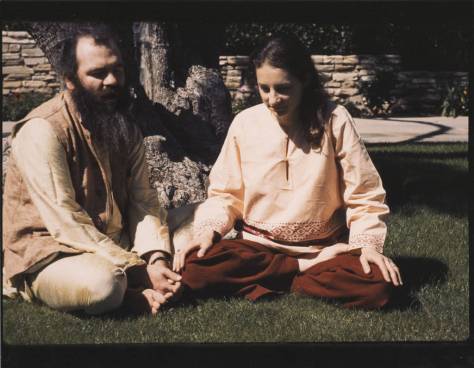
Young & Zazeela recorded their first full length album in Munich for Heiner Friedrich’s Edition X label. Released as a limited edition of 2000, the first 98 were signed & dated by the artists. Side one is a section of “Map of 49’s Dream”, performed by Young with sinewave drone & voice, with vocal accompaniment by Zazeela. Side two is an extract from “Study for the Bowed Disc” featuring the duo bowing a gong given to them by sculptor Robert Morris. Morris had made it for his dance piece “War” & asked Young to play it for the performance. Afterwards Morris presented the gong to Young, who began experimenting on it with double bass bows. Young recommended the listener turn the musick up (PLAY FUCKING LOUD), the resulting low drone being a spiritual tool. For the album artwork, Marian Zazeela embedded her calligraphic lettering & designs in black. The point is to focus on her artwork while concentrating on the vocal/sinewave drones of Young’s dream music. Continue reading La Monte Young & Marian Zazeela :: The Black Album 1969
Writers Susan Sontag and John Berger engage in a very stimulating conversation on the “lost art” of story telling. On Channel 4’s “To Tell A Story ” series. 1983, 63 minutes
The Catherine Wheel was a seventy-two minute dance film choreographed and directed by Twyla Tharp to a musical score by David Byrne.The show premiered in 1981 at the Winter Garden Theatre, New York City and a film was made in 1983. The film was part-produced by the BBC . Continue reading TWYLA THARP/ DAVID BYRNE :: THE CATHERINE WHEEL, 1981 >an early artworld cross over into mainstream pop culture
Another piece by Pelt, this one from their sixth album, Ayahuasca.
Credits:
From the esteemed drone music band, Pelt. New Delhi Blues is on their fourth album, Técheöd, released in 2000.
credits:
Jack Rose, Mike Gangloff, Patrick Best:
Guitar [Guitars], Organ [Lowry], Loops [Tape Loops], Shaker [Shakers], Banjo, Electronics [Beat Frequency Oscillator], Recorder [Tenor & Alto], Whistle [Double], Performer [Jupiter Machine]
Fiddle — Amy Shea
Percussion, Recorder [Bass] — Mark Cornick
Tabla [Tablas] — Mick Simmons
 The Incubator