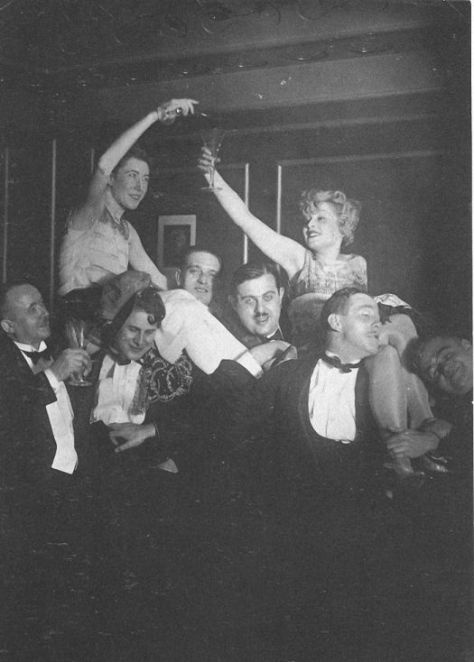
DIANE ARBUS: early & unseen works shown in the Met Breuer exhibition, 2016

early unseen diane arbus photographs arrive at the met

by Emily Manning, for I-D, July 12, 2016  *

Diane Arbus’ work drew her to Coney Island side shows, Times Square movie theaters, and smoky Lower East Side pool halls. But the enigmatic artist’s newest show opens today in the neighborhood she was born and raised in: the Upper East Side. For its inaugural season, the Met Breuer (the Metropolitan Museum of Art’s new 75th and Madison outpost, and formerly the Whitney’s uptown digs) has created a landmark exhibition highlighting Arbus’ never-before-seen early work. Titled diane arbus: in the beginning, the show features photographs taken between 1956 and 1962 — the critical years in which Arbus developed her idiosyncratic approach to capturing New York City street scenes and their wildly eclectic cast of characters. Continue reading DIANE ARBUS: early & unseen works shown in the Met Breuer exhibition, 2016
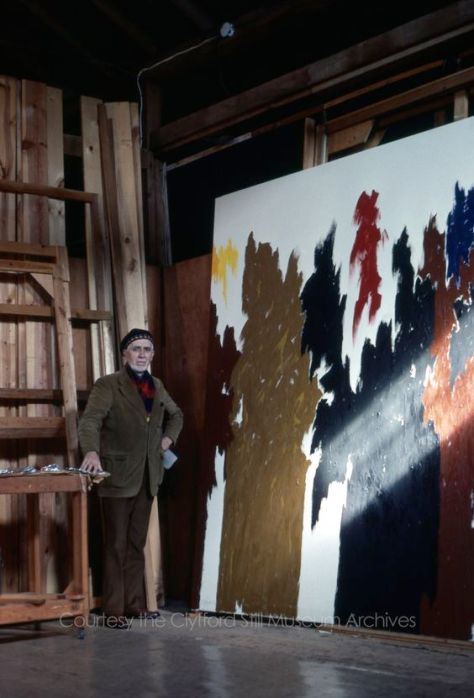
ELLSWORTH KELLY, hard edge art legend

Ellsworth Kelly’s earliest works of art were created in service to the United States, as part of a special camouflage unit in France during World War II. Kelly and his fellow artist-soldiers were tasked with fooling the Germans—using rubber and wood to construct fake tanks and trucks—into thinking the multitudes of Allied troops on the battlefield were much larger than reality. While this seems an unconventional early training for an artist, it proved a fitting one for Kelly.

“He was able to understand that there were these realities that for most of us are camouflaged,” says Virginia Mecklenburg, chief curator at the Smithsonian American Art Museum. “He would evoke those realities—a distinct feel of gravity, or the physics of weight and momentum that we rarely think about in tangible terms. He was able to get that across.” Continue reading ELLSWORTH KELLY, hard edge art legend

WISCONSIN DEATH TRIP, docu-drama by James Marsh, 1999, based upon the famous 1973 book by Michael Lesy

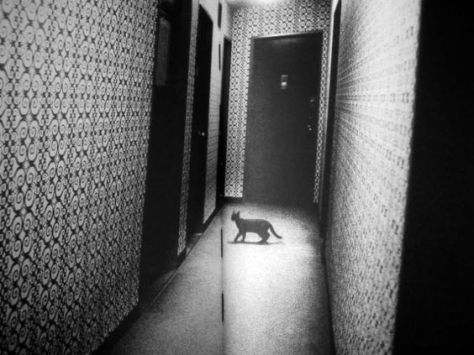
Wisconsin Death Trip is a 1999 American black-and-white and color docudrama film written and directed by James Marsh, based on the 1973 book of the same name by Michael Lesy. Original music for the film was composed by DJ Shadow, with original piano music for the closing credits by John Cale.

The film dramatizes the photographs by Charles Van Schaick found by in the early 1970s by Lesy, connected to a series of macabre incidents that took place in Black River Falls, Wisconsin in the late 19th century, and, in part, the film was shot on location there. Marsh makes use of silent black-and-white recreations with voice-over narration by Ian Holm contrasted with contemporary color footage of the area.

Wisconsin Death Trip is a 1973 non-fiction book by Michael Lesy, based on a collection of late 19th century photographs by Jackson County, Wisconsin photographer Charles Van Schaick – mostly taken in the city of Black River Falls – and local news reports from the same period. It emphasizes the harsh aspects of Midwestern rural life under the pressures of crime, disease, mental illness, and urbanization.

wisconsin_death_trip_525

Continue reading WISCONSIN DEATH TRIP, docu-drama by James Marsh, 1999, based upon the famous 1973 book by Michael Lesy

AB EX NY, The Painting Techniques of Barnett Newman: Vir Heroics Sublimis, via MoMA, 4 min.

Another short piece from the MoMA AB EX NY series, discussing Barnett Newman’s techniques in creating his Zip Paintings.

The Painting Techniques of Barnett Newman: Vir Heroicus Sublimis

Abstract Expressionist New York
The Museum of Modern Art, October 3, 2010–April 11, 2011
MoMA.org/abexny

Filmed by Plowshares Media
Images courtesy of Barnett Newman Foundation/Artists Rights Society (ARS), New York; and The Museum of Modern Art, New York
Music by Chris Parrello
Chris Parrello, Ian Young, Kevin Thomas, Ziv Ravitz

© 2010 The Museum of Modern Art

Playlist: FUTURE SOUL, by walkerdad, via Soundcloud, 178 min.

https://soundcloud.com/robin-hall1-gmail-com/future-soul-mix

I had the pleasure of spending three hours listening to walkerdad’s most recent playlist/mixtape release, Future Soul.   walkerdad is Robin Hall, a fervent music maker, listener & chronicler from nyc, whose previous mixtapes I’ve also enjoyed.  Incidentally, he also was a member of the  nyc no-wave outfit  Jack Ruby back in the day, whose tracks have seen a resurgence of interest, an album re-release and appearances in the recent HBO series, Vinyl.

Future Soul is tailor-made for the thinking romantic soul-music lover; the mix takes us on a journey through passages of varying textures, tempos and styles, and includes many classic soul and early r&b tracks that somehow stand out in a brand new way.  walkerdad avoids many soul music’s less memorable cliches, and while it’s packed with soul’s passion, it steers away from the overly lush, sentimental or bawdy corners of the loose genre. If the title is to be read as a gentle manifesto is unclear, but as a listening experience, Future Soul posited a sonic world of love, sorrow, lust and ebullience that I was very happy to inhabit for its 2 hours and 58 minutes of running time.

Highly recommended.

Also, check out walkerdad’s other mixtapes on his Mixcloud channel:

https://beta.mixcloud.com/kingwinter/

Idoma Seated Female Figures, Africa Origin: Nigeria Circa: 19 th Century AD to 20th Century AD

left: Idoma Seated Female Figure, Africa Origin: Nigeria Circa: 19 th Century AD to 20th Century AD

right:  Africa | Female figure “anjenu” from the Idoma people of Nigeria | Wood, polychrome paint

Idoma figures, Nigeria:

In 1985, François Neyt identified the Idoma’s “Ekotame and Anjenu sitting figures” as a pre-eminent corpus. (Neyt, 1985, p. 101-116). As part of the deeply ingrained tradition of female representation in the Benue region – maternity figures, women sitting and standing – they offer the most striking of its expressions in their extolment of strength and dignity combined.  Continue reading Idoma Seated Female Figures, Africa Origin: Nigeria Circa: 19 th Century AD to 20th Century AD

kneeling to the god of eclecticism and allergic to the commonplace