A video documentary combining exhibition footage of the Situationist International exhibitions with film footage of the 1968 Paris student uprising, and graffiti and slogans based on the ideas of Guy Debord (one of the foremost spokesmen of the Situationist International movement). Also includes commentary by leading art critics Greil Marcus, Thomas Levine, and artists Malcolm Mac Laren and Jamie Reid. Branka Bogdanov, Director and producer. NTSC-VHS 22 min. 1989
“The Situationist International (SI) was an international organization of social revolutionaries made up of avant-garde artists, intellectuals, and political theorists, prominent in Europe from its formation in 1957 to its dissolution in 1972.
The intellectual foundations of the Situationist International were derived primarily from anti-authoritarian Marxismand the avant-garde art movements of the early 20th century, particularly Dada and Surrealism. Overall, situationist theory represented an attempt to synthesize this diverse field of theoretical disciplines into a modern and comprehensive critique of mid-20th century advanced capitalism. The situationists recognized that capitalism had changed since Marx’s formative writings, but maintained that his analysis of the capitalist mode of productionremained fundamentally correct; they rearticulated and expanded upon several classical Marxist concepts, such as his theory of alienation. In their expanded interpretation of Marxist theory, the situationists asserted that the misery of social alienation and commodity fetishism were no longer limited to the fundamental components of capitalist society, but had now in advanced capitalism spread themselves to every aspect of life and culture. They rejected the idea that advanced capitalism’s apparent successes—such as technological advancement, increased income, and increased leisure—could ever outweigh the social dysfunction and degradation of everyday life that it simultaneously inflicted.
Essential to situationist theory was the concept of the spectacle, a unified critique of advanced capitalism of which a primary concern was the progressively increasing tendency towards the expression and mediation of social relations through objects. The situationists believed that the shift from individual expression through directly lived experiences, or the first-hand fulfillment of authentic desires, to individual expression by proxy through the exchange or consumption of commodities, or passive second-hand alienation, inflicted significant and far-reaching damage to the quality of human life for both individuals and society. Another important concept of situationist theory was the primary means of counteracting the spectacle; the construction of situations, moments of life deliberately constructed for the purpose of reawakening and pursuing authentic desires, experiencing the feeling of life and adventure, and the liberation of everyday life.
When the Situationist International was first formed, it had a predominantly artistic focus; emphasis was placed on concepts like unitary urbanism and psychogeography. Gradually, however, that focus shifted more towards revolutionary and political theory. The Situationist International reached the apex of its creative output and influence in 1967 and 1968, with the former marking the publication of the two most significant texts of the situationist movement, The Society of the Spectacle by Guy Debord and The Revolution of Everyday Life by Raoul Vaneigem. The expressed writing and political theory of the two aforementioned texts, along with other situationist publications, proved greatly influential in shaping the ideas behind the May 1968 insurrections in France; quotes, phrases, and slogans from situationist texts and publications were ubiquitous on posters and graffiti throughout France during the uprisings.”
-wikipedia, Situationist Interntional, https://en.wikipedia.org/wiki/Situationist_International


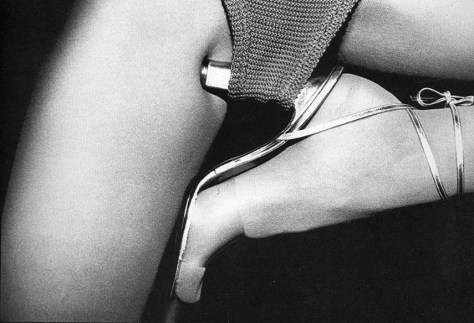 “David Bailey, an eminent British photographer, is known for his tremendous influence in advertising and fashion industry. Working for more than half a century, Bailey has shot basically everyone – from the Queen of England to Australian aboriginals. Yet, the majority of his models are various icons of music, film, and art. Bailey was initially inspired by Henri Cartier-Bresson and he started his career in 1959 when he became a photographer for British Vogue. His style is known to be stripped-down and direct style and he is a mastermind of revealing the beauty of his models. The pictures I take are simple and direct and about the person I’m photographing and not about me. I spend more time talking to the person than I do taking pictures, says Bailey.”
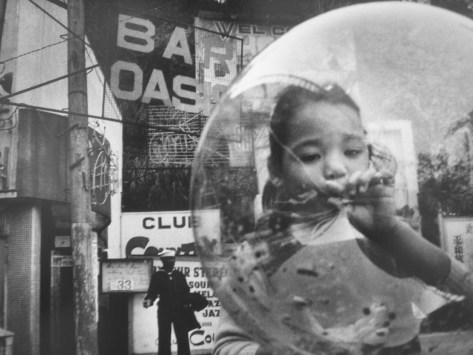 “Shomei Tomatsu (1930 – 2012) was perhaps the most influential Japanese photographer of the post-war era. His raw, grainy and impressionistic style signalled a dramatic break with the quiet formalism that had defined earlier photography. Influencing the anti-establishment Provoke photography movement in Japan in the late 1960s, he is hailed as the stylistic mentor of artists such as Daido Moriyama, Nobuyoshi Araki and Takuma Nakihara.”
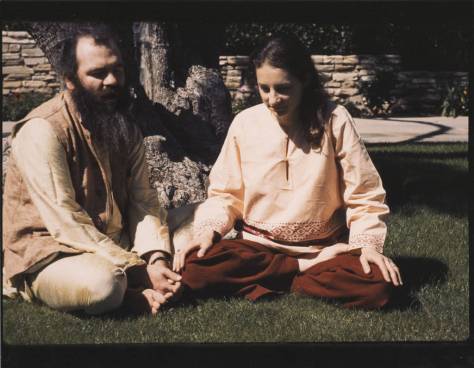
 The Incubator