“A PHOTOGRAPHER LOOKS AT EVERYTHING, WHICH IS WHY HE MUST LOOK FROM BEGINNING TO END. FACE THE SUBJECT HEAD-ON, STARE FIXEDLY, TURN THE ENTIRE BODY INTO AN EYE AND FACE THE WORLD”
– Shomei Tomatsu
“TOMATSU IS THE PIVOTAL FIGURE OF RECENT JAPANESE PHOTOGRAPHY, HIS IMAGES ARE AN INTUITIVE RESPONSE TO THE EXPERIENCE OF LIFE ITSELF.” – John Szarkowski
Working Title/Artist: Cafe, Avenue de la Grande-Armee Department: Photographs Culture/Period/Location: HB/TOA Date Code: Working Date: 1924-25 mma digital photo #PH9138
“…I have assembled photographic glass negatives… in all the old streets of Old Paris, artistic documents showing the beautiful civil architecture from the 16th to the 19th century. The old mansions, historic or interesting houses, beautiful façades, lovely doors, beautiful panelling, door knockers, old fountains, stylish staircases (wrought iron and wood) and interiors of all the churches in Paris… This enormous documentary and artistic collection is now finished. I can say that I possess the whole of Old Paris.” -Eugène Atget, 1920
“The first time I saw photographs by Eugène Atget was in 1925 in the studio of Man Ray in Paris. Their impact was immediate and tremendous. There was a sudden flash of recognition – the shock of realism unadorned. The subjects were not sensational, but nevertheless shocking in their very familiarity. The real world, seen with wonderment and surprise, was mirrored in each print.”-Berenice Abbott, 1964
Karel Teige (13 December 1900- 1 October 1951) was a Czech modernist avant-garde artist, writer, critic and one of the most important figures of the 1920s and 1930s movement. He was a member of the Devětsil (Butterbur) movement in the 1920s and also worked as an editor and graphic designer for Devětsil’s monthly magazine ReD (Revue Devětsilu). One of his major works on architecture theory is The Minimum Dwelling (1932).
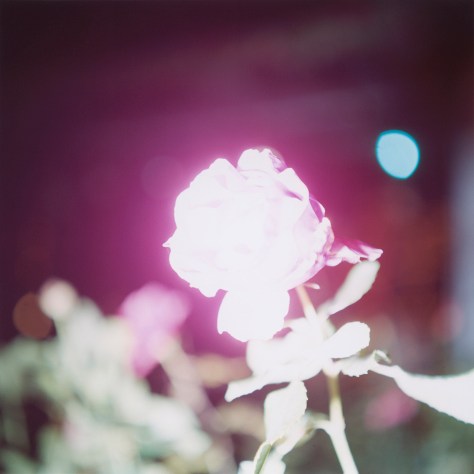
“Kawauchi has the special privilege of being one of very few Japanese contemporary photographers to have published three books simultaneously: “Utatane,” “Hanabi” and “Hanako” were all released in 2001. “Utatane” and “Hanabi”, lead to her receiving the Kimura Ihei Award, one of Japan’s most prestigious awards for young up-and-coming photographers, bestowed shortly after their professional debuts.
Ametsuchi (heaven and earth) is a theme that Kawauchi has been contemplating as she searches for the origins of civilization and culture. By capturing the 1,000-year-old ritual of Mount Aso, she contemplates time-honored traditions of humanity. In the series, she includes photographs from three more sites — the Wailing Wall in Jerusalem, the view from a planetarium, and the Shiromi Shrine dance ritual in Miyazaki —and by mixing these images together, she turns her attention to ancient ceremonies here on Earth as a connection to the heavens.”
In 1933 photographer Andre Kertész was commissioned for the series, Distortion, about 200 photographs of Najinskaya Verackhatz and Nadia Kasine, two models portrayed nude and in various poses, with their reflections caught in a combination of distortion mirrors, similar to a carnival’s house of mirrors. In some photographs, only certain limbs or features were visible in the reflection. Some images also appeared in the 2 March issue of the “girly magazine” Le Sourire and in the 15 September 1933 issue of Arts et métiers graphiques. Later that year, Kertész published the book Distortions, a collection of the work. -wikipedia, Andre Kertesz
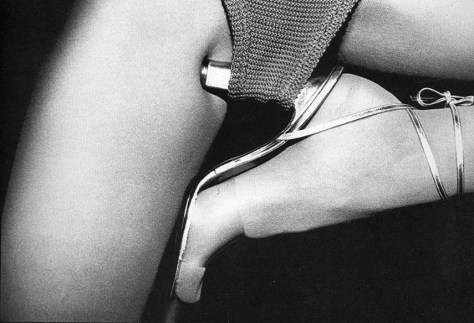
“THE EROTIC, UNNERVING IMAGES OF HIGH HEELED SHOES WALKING, DISCONNECTED FROM THE BODY, ALONG BEACHES OR ACROSS INDUSTRIAL WASTELAND ARE IN CONTRAST TO OTHER SEXUALLY CHARGED PHOTOGRAPHS FOR FRENCH VOGUE”
– SUZY MENKES, VOGUE
Guy Bourdin, born in Paris in 1928, was the pioneering fashion photographer whose arresting photographs filled the pages of French Vogue for three decades from the 1950s through to the 80s. He is notorious for breaking the boundaries of traditional commercial photography and reshaping the classic fashion picture, using a daring narrative and vibrant colour palette. Vogue’s editor introduced Bourdin to the shoe designer Charles Jourdan, for whom he became the brand’s official advertising photographer, producing some of his best images during this period. The beauty in many of his pictures is that you can see small imperfections and fine details such as the models’ pores. In this respect they hold an integrity that is rarely seen today.
In 1950, Guy Bourdin met Man Ray and became his protégé. The spirit of the Surrealists is ever-present in Bourdin’s work: we see this in the dream-like quality of his pictures and the artist’s use of uncanny juxtapositions. Taking photography as his medium of choice, Bourdin explored the provocative and the sublime with a relentless perfectionism and sharp humour. He captured the imagination of a generation, and yet his images have a timeless quality, so much so that they continue to influence the worlds of fashion and advertising today, twenty years since his death.
To coincide with the UK’s largest ever exhibition of the influential and enigmatic fashion photographer Guy Bourdin at Somerset House, the Michael Hoppen Gallery is delighted to exhibit a wonderful group of images ‘Walking Legs’. Officially being unveiled alongside Somerset House’s show ‘Image-Maker’, ‘Walking Legs’, is one of Bourdin’s most loved Charles Jourdan campaign series. ‘Walking legs’ was shot in 1979 by the French designer and photographer using quintessentially English landscapes as the backdrop to this high-end campaign. Photographed at locations on a road trip taken in a Cadillac from London to Brighton, many of the city and seaside scenes remain the same today and include familiar sights such as the London bus stop and the classic park bench. As with much of Bourdin’s work, the model is mysteriously absent – all that is seen is a pair of mannequin legs, adorned with Charles Jourdan’s creations.
-Guy Bourdin, Walking Legs, Michael Hoppen Gallery, http://www.michaelhoppengallery.com/exhibitions/8/overview/#/image_standalone/14
“David Bailey, an eminent British photographer, is known for his tremendous influence in advertising and fashion industry. Working for more than half a century, Bailey has shot basically everyone – from the Queen of England to Australian aboriginals. Yet, the majority of his models are various icons of music, film, and art. Bailey was initially inspired by Henri Cartier-Bresson and he started his career in 1959 when he became a photographer for British Vogue. His style is known to be stripped-down and direct style and he is a mastermind of revealing the beauty of his models. The pictures I take are simple and direct and about the person I’m photographing and not about me. I spend more time talking to the person than I do taking pictures, says Bailey.”
“Shomei Tomatsu (1930 – 2012) was perhaps the most influential Japanese photographer of the post-war era. His raw, grainy and impressionistic style signalled a dramatic break with the quiet formalism that had defined earlier photography. Influencing the anti-establishment Provoke photography movement in Japan in the late 1960s, he is hailed as the stylistic mentor of artists such as Daido Moriyama, Nobuyoshi Araki and Takuma Nakihara.”


 :
:


 “David Bailey, an eminent British photographer, is known for his tremendous influence in advertising and fashion industry. Working for more than half a century, Bailey has shot basically everyone – from the Queen of England to Australian aboriginals. Yet, the majority of his models are various icons of music, film, and art. Bailey was initially inspired by Henri Cartier-Bresson and he started his career in 1959 when he became a photographer for British Vogue. His style is known to be stripped-down and direct style and he is a mastermind of revealing the beauty of his models. The pictures I take are simple and direct and about the person I’m photographing and not about me. I spend more time talking to the person than I do taking pictures, says Bailey.”
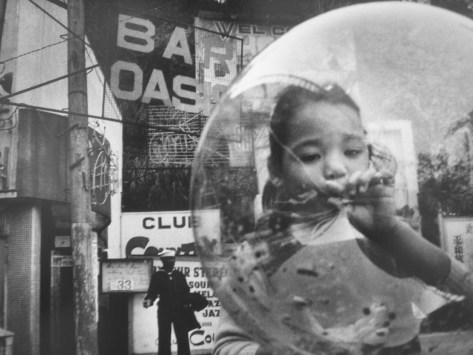 “Shomei Tomatsu (1930 – 2012) was perhaps the most influential Japanese photographer of the post-war era. His raw, grainy and impressionistic style signalled a dramatic break with the quiet formalism that had defined earlier photography. Influencing the anti-establishment Provoke photography movement in Japan in the late 1960s, he is hailed as the stylistic mentor of artists such as Daido Moriyama, Nobuyoshi Araki and Takuma Nakihara.”
 The Incubator