From VHS. A BBC ‘Horizon’ film about the remarkable life of the Austrian philosopher Ludwig Wittgenstein. He was born in Vienna in 1889 and died in Cambridge in 1951, having made a profound impact upon the world of modern philosophy.

From VHS. A BBC ‘Horizon’ film about the remarkable life of the Austrian philosopher Ludwig Wittgenstein. He was born in Vienna in 1889 and died in Cambridge in 1951, having made a profound impact upon the world of modern philosophy.
Venus in Cancer is the sixth studio album by composer and guitarist, the late Robbie Basho, released in 1969.
 :
:
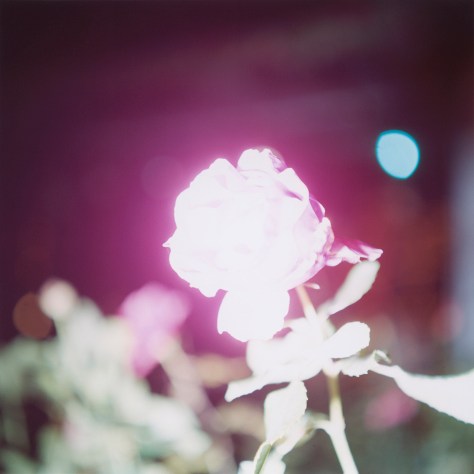
“Kawauchi has the special privilege of being one of very few Japanese contemporary photographers to have published three books simultaneously: “Utatane,” “Hanabi” and “Hanako” were all released in 2001. “Utatane” and “Hanabi”, lead to her receiving the Kimura Ihei Award, one of Japan’s most prestigious awards for young up-and-coming photographers, bestowed shortly after their professional debuts.
Ametsuchi (heaven and earth) is a theme that Kawauchi has been contemplating as she searches for the origins of civilization and culture. By capturing the 1,000-year-old ritual of Mount Aso, she contemplates time-honored traditions of humanity. In the series, she includes photographs from three more sites — the Wailing Wall in Jerusalem, the view from a planetarium, and the Shiromi Shrine dance ritual in Miyazaki —and by mixing these images together, she turns her attention to ancient ceremonies here on Earth as a connection to the heavens.”
-Japan Times, June 4, 2012
Composer Morton Feldman’s epic, 4.5 hour long piece dedicated to his friend Philip Guston hovers in place, shimmering like a slowly revolving mobile, its langorous harmonies hanging in mid-air as they gradually evaporate. The piece was written in 1984, in memoriam to Philip Guston, who passed away in 1980. Feldman and Philip Guston were best friends until 1970, when the painter’s sudden switch back from abstract expressionism to representational painting appalled the composer so much that the two men remained estranged until Guston’s death 10 years later. For Philip Guston is one of the longest of Feldman’s serenely expansive late scores. Continue reading MORTON FELDMAN :: FOR PHILIP GUSTON – S.E.M Ensemble, 2000, 285 minutes


The late Martin Kippenberger and his complex, intertwined oeuvre and work has been widely discussed, in attempts to reconcile his mythic persona with his multi-faceted and highly prolific artistic output, which moved between painting, drawing, sculpture, and performance. Kippenberger blurred the lines between the artist and their art, between ordinary life and art performance, between the banal and the substantial, between the vernacular and the formal, between high and low culture. He was highly prolific and left a trail of confounded critics and controversial readings of his pursuits. Continue reading MARTIN KIPPENBERGER – A COLLAGED PORTRAIT: “My style is where you see the individual and where a personality is communicated through actions, decisions, single objects and facts, where the whole draws together to form a history.”


Palermo was born Peter Schwarze in Leipzig, Germany, in 1943, and adopted as an infant, with his twin brother, Michael, by foster parents named Heisterkamp. He adopted his outlandish name in 1964, during his studies with Bruno Goller and Joseph Beuys at the Kunstakademie Düsseldorf between 1962 and 1967. The name refers to Frank “Blinky” Palermo, an American Mafioso and boxing promoter who managed Sonny Liston. Continue reading BLINKY PALERMO
Bud Powell is remembered as the father of modern jazz piano. Breaking away from the popular style of stride piano, Bud innovated new techniques and a new sound which melded with the bebop that Charlie Parker and Dizzy Gillespie had invented; he approached the piano in almost the same way that Charlie Parker did the alto saxophone. Continue reading BUD POWELL: a time-lapse of a life via song performances


![Untitled [Fragment 7/5] 1965 Bridget Riley born 1931 Purchased 1970 http://www.tate.org.uk/art/work/P07110](https://i0.wp.com/theincubator.live/wp-content/uploads/2016/12/tumblr_o9amed1rlg1t6vefuo1_1280.jpg?w=186&h=93&ssl=1 "Untitled [Fragment 7/5] 1965 by Bridget Riley born 1931")


Bridget Riley is an abstract painter who came to prominence in the American Op Art movement of the 1960s, after her inclusion in the 1965 exhibition “The Responsive Eye” at The Museum of Modern Art. There, her black-and-white paintings—which created illusions of movement—were shown alongside works by Victor Vasarely, Richard Anuszkiewicz, Frank Stella, and Ellsworth Kelly, among others. In the late ’60s, she introduced color into her work and went on to win the Prize for Painting at the 1968 Venice Biennale. Since then her work has unfolded through numerous groups and series that engage the viewers’ perception to induce simultaneously shifting patterns of forms and changing, optical mixtures of colors. Over the past decade, she has also made large, black-and-white murals that shape and articulate the environments they occupy. Her work is ultimately inspired by nature—“although in completely different terms,” she says, adding, “For me nature is not landscape, but the dynamism of visual forces—an event rather than an appearance.”
British, b. 1931, Norwood, London, United Kingdom, based in London, United Kingdom – Artsy.net
Roscoe Holcomb, (born as Roscoe Halcomb, September 5, 1912 – died February 1, 1981) was an American singer, banjo player, and guitarist from Daisy, Kentucky. A prominent figure in Appalachian folk music, Holcomb was the inspiration for the term “high, lonesome sound,” coined by folklorist and friend John Cohen. The “high lonesome sound” term is now used to describe bluegrass singing, although Holcomb was not, strictly speaking, a bluegrass performer.
“Bob Dylan stated, “Roscoe Holcomb has a certain untamed sense of control, which makes him one of the best.” Eric Clapton called Holcomb “my favorite [country] musician.” Holcomb’s white-knuckle performances reflect a time before radio told musicians how to play, and these recordings make other music seem watered-down in comparison. His high, tense voice inspired the term “high lonesome sound.” Self-accompanied on banjo, fiddle, guitar, or harmonica, these songs express the hard life he lived and the tradition in which he was raised.” -Smithsonian Folkways, recording notes,http://www.folkways.si.edu/roscoe-holcomb/i-aint-got-no-sugar-baby-now/old-time/music/track/smithsonian
Continue reading ROSCOE HOLCOMB :: I AIN’T GOT NO SUGAR BABY NOW
American Hollow tells the tale of a close-knit Appalachian family that has changed little in the last 100 years.
American Hollow (1999)
Documentary [1 h 30 min]
Bascum Bowling, Clint Bowling, Edgar Bowling, Iree Bowling
Director: Rory Kennedy
Writer: Mark Bailey Continue reading AMERICAN HOLLOW, documentary, 1999, 90 min.
 The Incubator