


Bild 017


CCS Amy Sillman Artist


a small assortment of works from the highly prolific and multi-faceted Amy Sillman.

a small assortment of works from the highly prolific and multi-faceted Amy Sillman.
On May 5, 2012, Jazz trumpeter and visionary composer Wadada Leo Smith released Ten Freedom Summers, a large-scale work 34 years in the making, comprising a four-disc box set. The monumental 5-hour work is Smith’s meditation on the civil-rights movement and other related topics and is organized as 19 fully developed suites for various music ensemble configurations. Continue reading Wadada Leo Smith :: “Martin Luther King, Jr.”, from the album Ten Freedom Summers
Risset was a composer of orchestral, chamber, vocal, piano and electroacoustic works. Born in Le Puy-en-Velay on 18 March 1938, he studied composition and piano at École Normale Supérieure de Paris from 1957–61. He also studied mathematics and physics and earned a Doctorat ès Sciences in 1967. He started work at the Bell Labs in 1965 and from 1967–69 he worked on brass and timbre synthesis as well as pitch and sound processing and development. There he met F Richard Moore, John Pierce, James Tenney, Vladimir Ussachevsky and Edgard Varèse. He went on to work at the Centre National de la Recherche Scientifique in Marseille from 1969–72, and on computer sound systems at the Faculté d’Orsay and the Université de Paris in 1970–71. He was also chair of the computer department at IRCAM from 1975–79.
Risset’s albums including Mutations (1978), Songes – Passages – Computer Suite From Little Boy – Sud (1988), Invisible (1996) and Elementa (2001). In 2014 Editions Mego released Music From Computer, which reached number 12 in The Wire‘s Top 50 Chart of that year. Describing his work in The Wire 363, Philip Clark wrote: “Risset sculpts his found objects into plastic forms – birdsong stretched out of melodic alignment, high pitched insects heard as basso profundo drones… [his] music has a poetic backbone impressively all its own.” Risset was the author of An Introductory Catalog Of Computer Synthesized Sounds (1969).
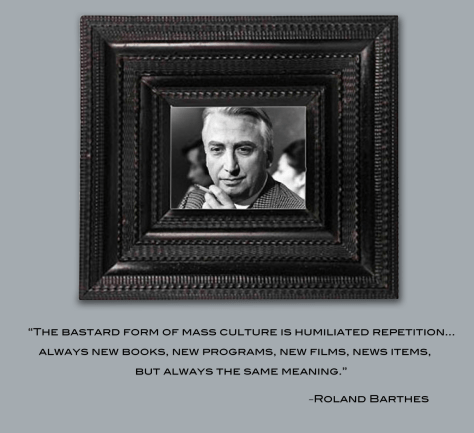
In this new miniature documentary from the fabulous School Of Life series, Socrates’ ideas about democracy are explored. He favored”intellectual” democracies, but warned against “democracies based upon birth” which he believed could easily lead to demagoguery.
A timely video for us all.
“As an artist you have to fight and survive the wilderness to keep your creative freedom. Creativity is very fragile. It’s like a leaf in the fall; it hangs and when it drops you don’t know where it’s drifting.” –Karel Appel
Karel Appel, (Christiaan Karel Appel April 1921 – 3 May 2006) was a Dutch painter, sculptor, and poet. He started painting at the age of fourteen and studied at the Rijksakademie in Amsterdam in the 1940s. He was one of the founders of the avant-garde movement Cobra in 1948.
Continue reading THE REALITY OF KAREL APPEL, 1962, 15 minutes
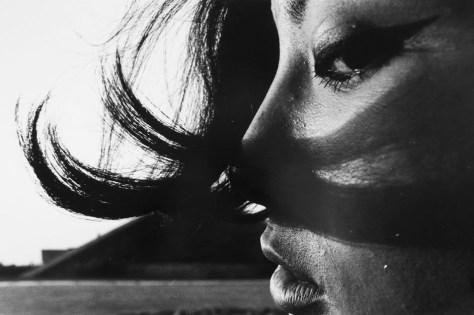 “Akira Sato, the Japanese photographer, was noted for his graphic and iconic experimental photographs of women. His seminal book, also entitled Woman, is an enigmatic collection of portraits finely meshed with a type of fashion, but as with all things Japanese, his work retained an exotic quality that was to define his style. Sato was born on July 30, 1930 in Tokyo. While a student of economics at Yokohama National University he was an avid reader of LIFE and other photographic and fashion magazines at the American CIE library in Hibiya. He graduated in 1953 and one year later made the move and became a freelance photographer, specializing in fashion. Continue reading AKIRA SATO :: UNTITLED, 1960
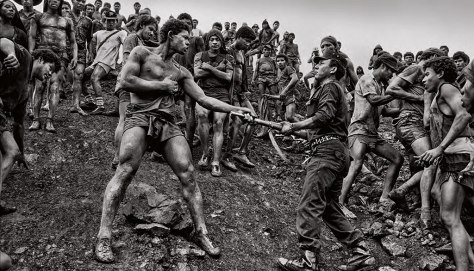 Sebastião Salgado is likely the most eminent photojournalist working today. Of Salgado’s many iconic images, perhaps the most famous is this picture of a dispute between Serra Pelada gold mine worker and military police taken in Brazil in 1986. It is the classic picture of tension with a twist–the authority is in the hands of the police on the right, but he earns much less than the miners thus infusing that facet of tension into the picture too.
“Serra Pelada was a large gold mine in Brazil 430 kilometres (270 mi) south of the mouth of the Amazon River. In 1979 a local child swimming on the banks of a local river found a 6 grams (0.21 oz) nugget of gold. Soon word leaked out and by the end of the week a gold rush had started. During the early 1980s, tens of thousands of prospectors flocked to the Serra Pelada site, which at its peak was said to be not only the largest open-air gold mine in the world, but also the most violent. Continue reading Sebastião Salgado :: The Hell of Serra Pelada
SUBMIT TO ME is underground filmmaker Richard Kern’s third film, from 1985. Featuring Lydia Lunch, Cruella DeVille, Phil Forrest, Audrey Rose, Lung Leg, Brian Moran, Margie, Margo Day, Chris, Clint Ruin, Tom Turner, Amy Turner and
Richard Kern. Music by the Butthole Surfers.
“He (Kern) first came to underground prominence as part of the underground cultural explosion in the East Village of New York City in the 1980s, with erotic and experimental films like The Right Side of My Brain and Fingered, which featured underground personalities of the time such as Lydia Lunch, David Wojnarowicz, Sonic Youth, Kembra Pfahler, Karen Finley and Henry Rollins. Like many of the musicians around him, Kern had a deep interest in the aesthetics of extreme sex, violence and perversion and was one of the leading lights of the movement called Cinema of Transgression, a term coined by Nick Zedd.” – wikipedia

 The Incubator